
For Alim Leung, improving access to healthcare has been the thread connecting every stage of her career.
Originally from Detroit, Michigan, Alim now lives in Durban, South Africa. Before joining NeuroKids, she spent more than a decade working in healthcare and public health as a paramedic, healthcare consultant, and researcher in the United States and internationally. Throughout her career, one goal remained constant: helping make quality healthcare more accessible for the communities that need it most.
When a former Peace Corps colleague introduced her to NeuroKids, Alim was immediately drawn to the organization’s approach of strengthening local health systems so children can access specialized neurosurgical care closer to home.
“I really saw how much it aligned with what I was personally and professionally trying to do,” she says.
Today, Alim serves as NeuroKids’ Monitoring, Evaluation, and Learning (MEL) Manager. Working closely with coordinators and clinicians across NeuroKids’ network, she helps the organization understand what is working, identify opportunities to improve, and measure its impact over time.
For Alim, monitoring and evaluation is not simply about producing reports. It is about learning.
Every data point helps NeuroKids understand how its programs are performing, where barriers remain, and how care can continue improving. For Alim, the numbers are never just statistics. They represent children, families, and opportunities to strengthen care for the next family who walks through the hospital doors.
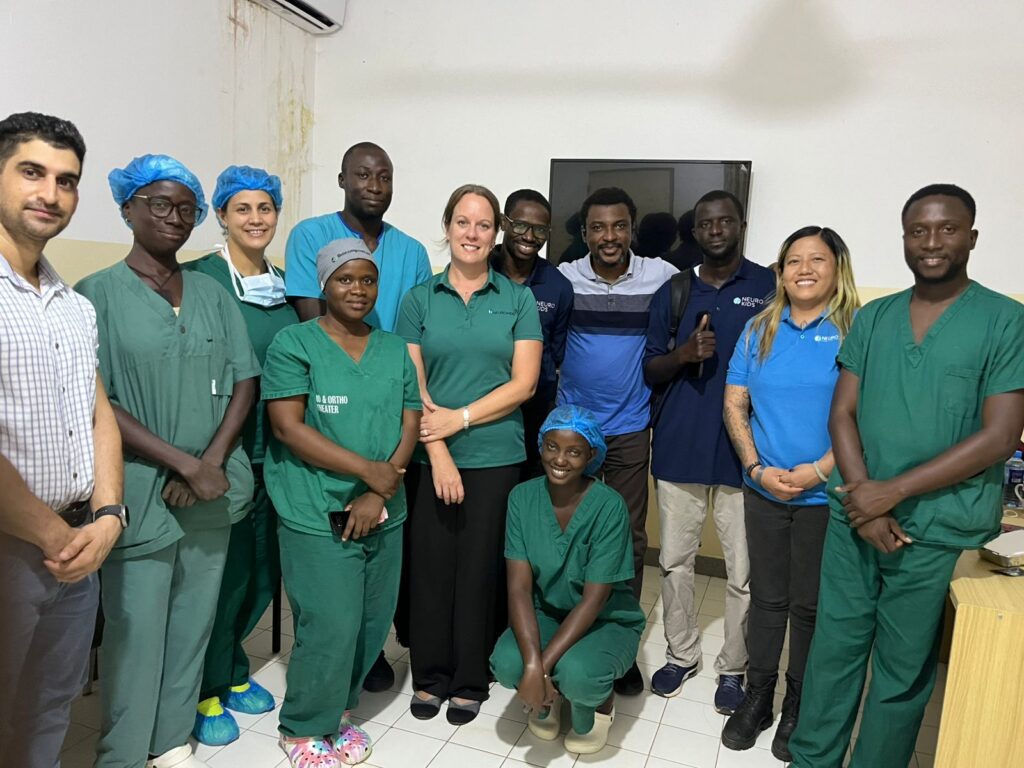
Although much of Alim’s work happens behind a computer screen, visiting NeuroKids sites has allowed her to see firsthand how the data she manages reflects real lives.
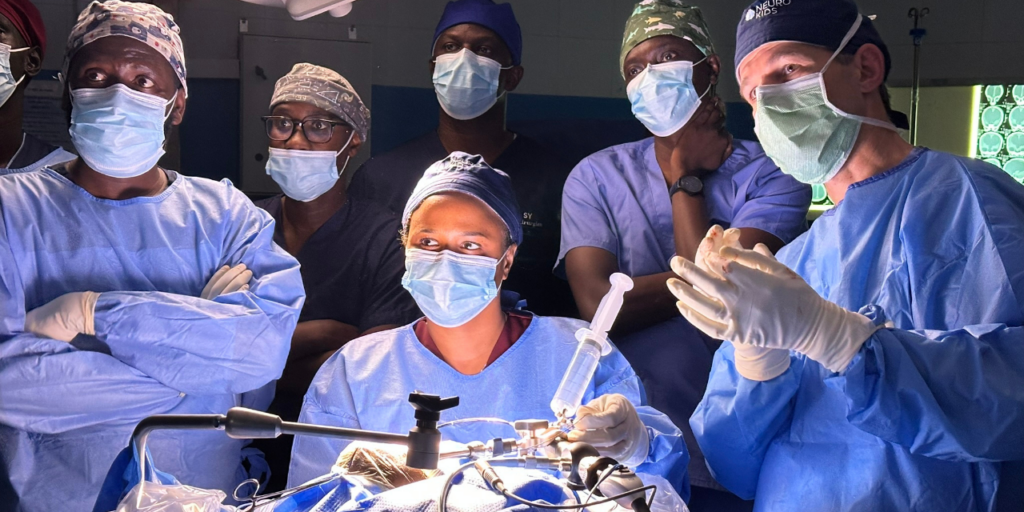
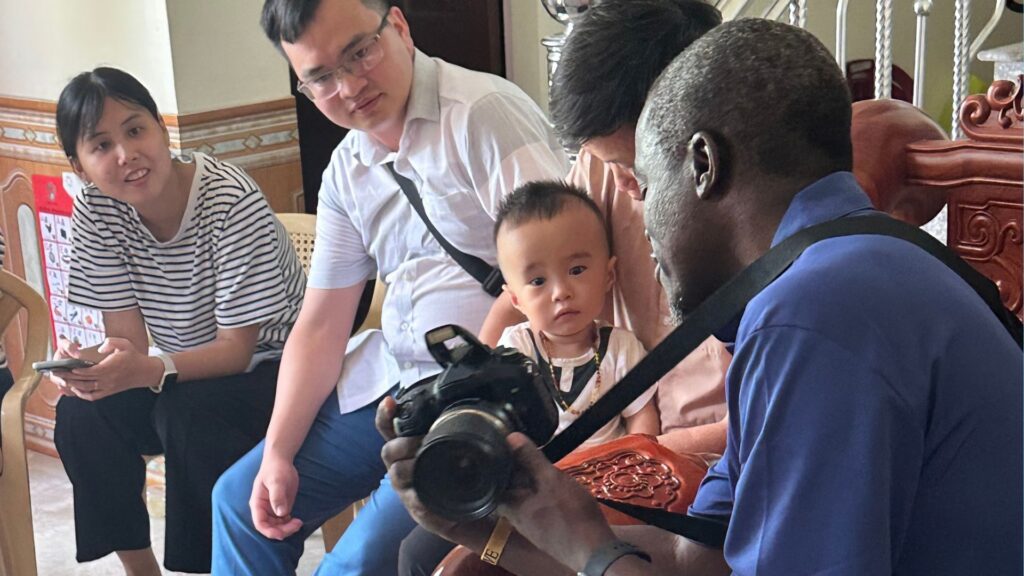
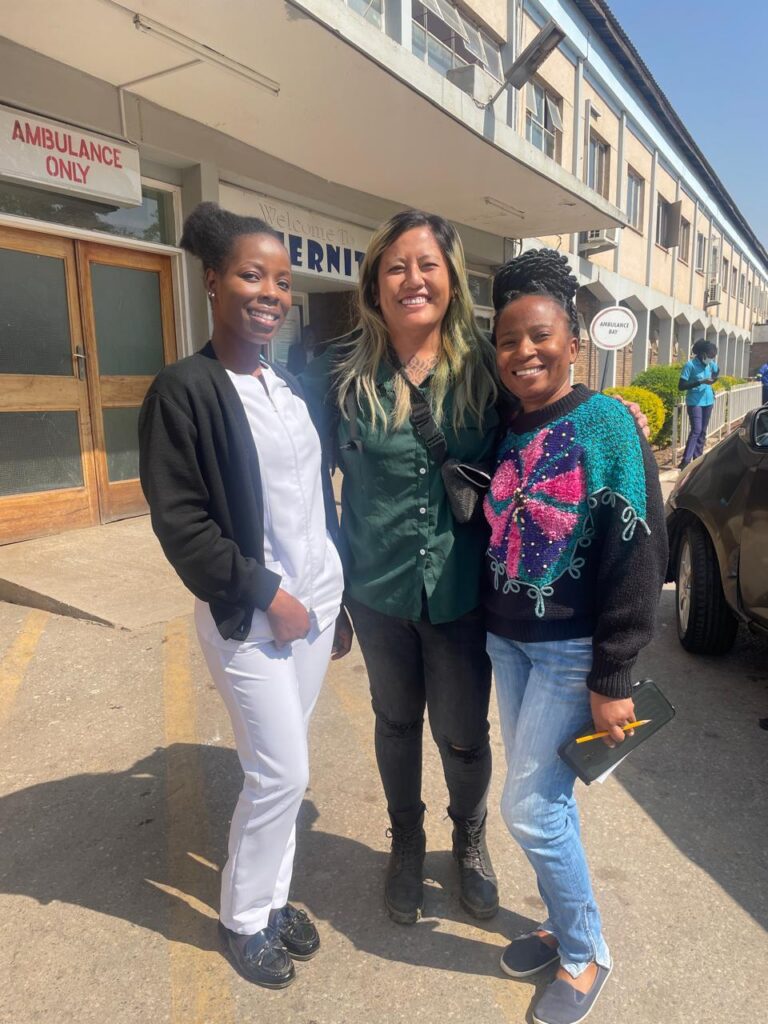
During a visit to Lusaka, Zambia, she shadowed coordinators, met families, and observed the Warf procedure (ETV/CPC) in real time. She saw how coordinators guide families through every stage of care by helping parents understand their child’s diagnosis, coordinating follow-up appointments, answering questions, and providing support long after surgery.
She later visited The Gambia, where she helped establish monitoring systems and watched NeuroKids-trained surgeons mentor another pediatric neurosurgeon in the Warf procedure.
Those experiences reinforced what makes NeuroKids’ model different.
Rather than providing short-term care, NeuroKids invests in long-term partnerships that strengthen local capacity. Through ongoing training, mentorship, and support, local surgical teams are equipped to provide specialized care within their own hospitals, allowing more children to receive treatment closer to home.
One patient from Zambia has stayed with Alim ever since.
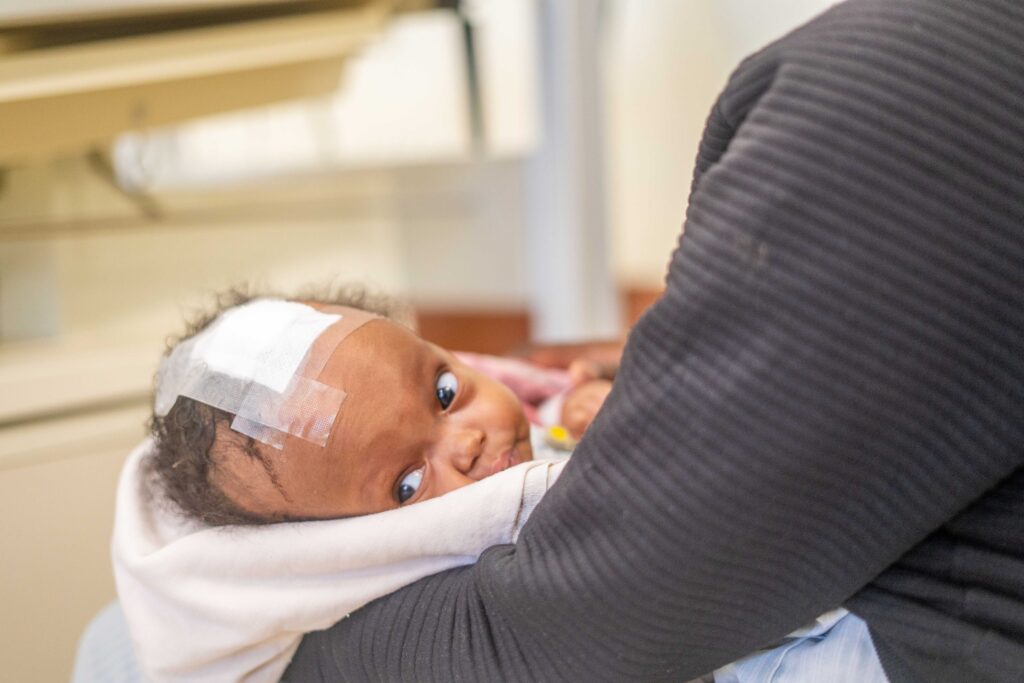
The girl had undergone the Warf procedure several years earlier. When Alim met her, she was seven years old, healthy, thriving, and attending school. While the coordinator spoke with her mother, Alim sat beside her drawing pictures.
Seeing her years after surgery brought the purpose behind the data into focus.
“It is not just the immediate effect,” she says. “It is the long-term effect.”
Looking ahead, Alim hopes to see NeuroKids continue expanding into more hospitals so families can access specialized care closer to home.
For her, success means stronger health systems, more trained pediatric neurosurgeons, better data to guide decision-making, and ultimately more children receiving timely, life-changing treatment.
What keeps her motivated is the people.
She describes the NeuroKids team as collaborative, passionate, and deeply committed to improving children’s lives. She is equally inspired by the resilience of the children and families she has met throughout her work.
“They are in my mind and my heart,” she says.
She also values NeuroKids’ collaborative approach to global health. By combining focused in-person training with long-term remote mentorship, the organization supports local leadership while creating opportunities for shared learning across countries.
For those looking to support NeuroKids, Alim believes everyone has a role to play. Whether by giving, learning more about hydrocephalus and spina bifida, or helping raise awareness, each action helps more children access the care they need.
For Alim, every spreadsheet represents something far more important than numbers on a page. Behind every data point is a child whose future has changed, a family finding hope, or a surgeon gaining the skills to care for the next generation of patients.
Every number has a name. And every number represents another child with the opportunity to live a healthier, fuller life.