
This blog is authored by Derek Johnson, CEO and Co-Founder of NeuroKids.
By the time you finish reading this, another child will have died from hydrocephalus.
Every three minutes, somewhere in the world, most likely in Africa, a child dies from a brain condition that we know how to treat. Not a mystery disease. Not something waiting on a breakthrough. A condition with a proven surgical solution that has been around for more than twenty years.
That gap, between what we know how to do and how many children actually receive it, is the reason NeuroKids exists. And the single biggest lever we have to close it is time. Specifically, how early a baby is diagnosed and how quickly they reach treatment.
What hydrocephalus is, and why it’s so easy to miss
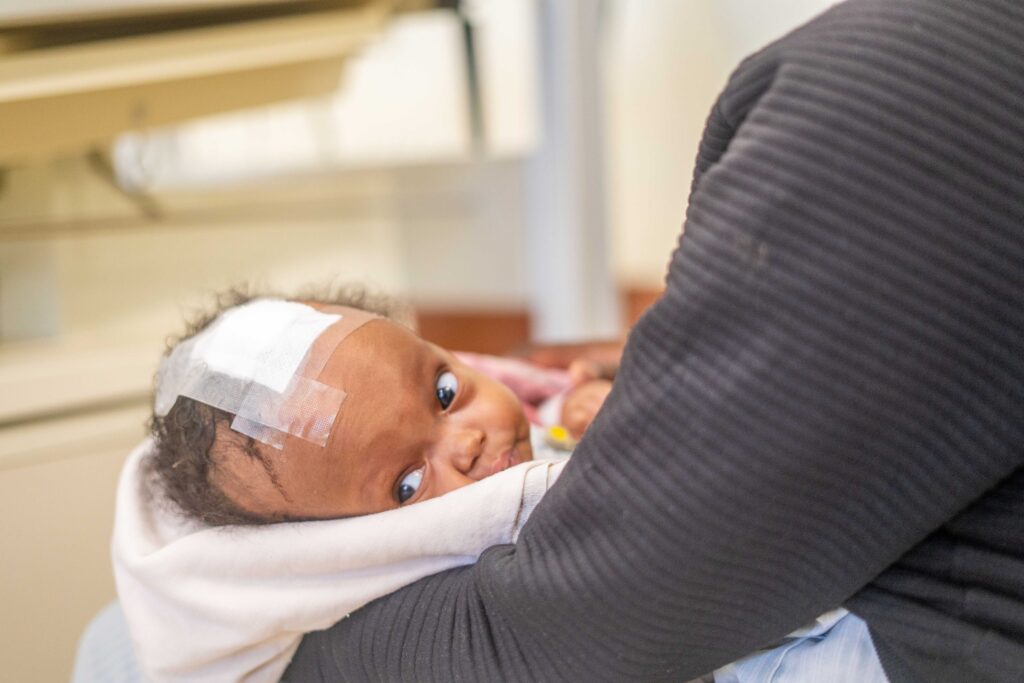
Hydrocephalus is often described as “water on the brain.” Cerebrospinal fluid builds up inside the brain’s ventricles, putting increased pressure on the developing brain. In an infant, whose skull hasn’t fused yet, the first visible sign is often simply a head that is getting bigger..
It is the most common brain condition in children worldwide, with roughly five million children living with hydrocephalus today, and about half a million new cases every year. Eighty percent of those cases are in low- and middle-income countries, and half are in Africa. In much of the world it follows spina bifida or a newborn infection, both of which are far more common in places where mothers and babies have the least access to care.
And yet hydrocephalus is vastly underreported and largely unrecognized in global health. Many families, and even frontline health workers, have never been told what a rapidly growing head means, or that something can be done about it.You can’t act on what you don’t recognize.
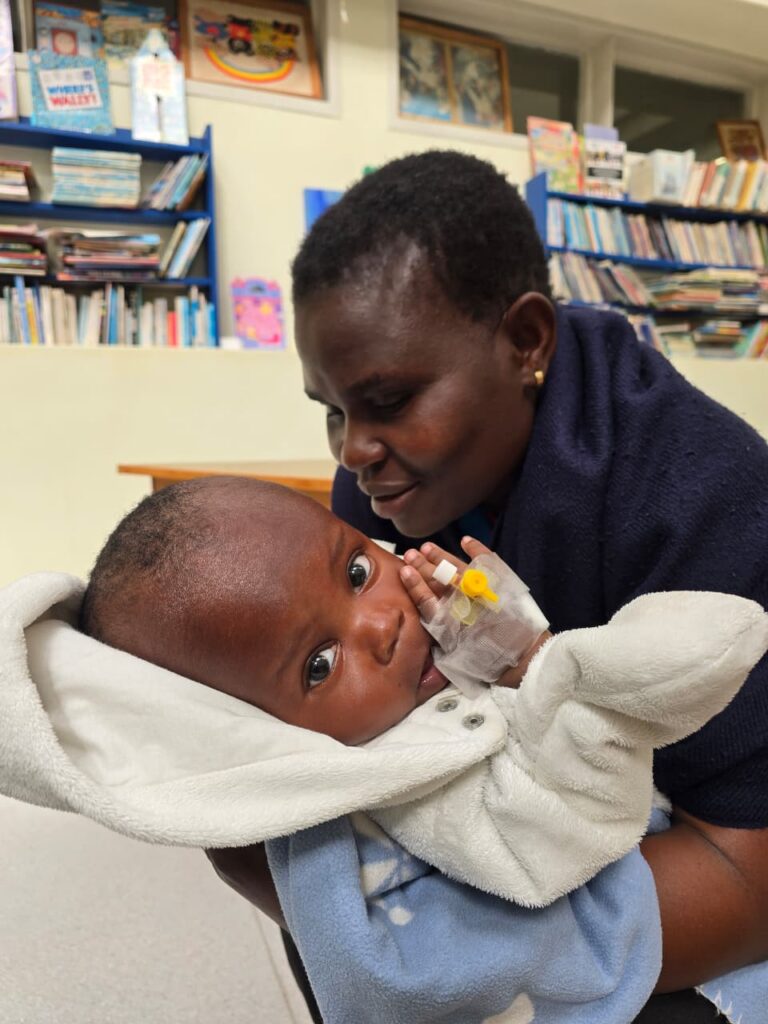
The window is small
If hydrocephalus goes untreated, more than half of these children will die before their second birthday. Most who survive will be left profoundly disabled. The vast majority of those five million children living with hydrocephalus today are living with disability. This is one of the most significant, and least talked about, causes of childhood disability in the world.
Right now, roughly 90 percent of children with hydrocephalus in African countries never receive treatment.
Read that again. Ninety percent. For a condition we can treat.
Every month a baby waits is a month of pressure on a brain that is doing the most important developmental work it will ever do. Early diagnosis isn’t a nice-to-have. It is the difference between a child who grows up to go to school and a child who never gets that chance.
Why early treatment works so well for babies
In 2003, at a small mission hospital in eastern Uganda, NeuroKids founder Dr. Ben Warf, an American pediatric neurosurgeon, pioneered a new way to treat hydrocephalus in infants. The procedure, endoscopic third ventriculostomy with choroid plexus cauterization, or ETV/CPC, revolutionized how hydrocephalus is treated, including in the United States.
For decades, the standard treatment has been a ventriculoperitoneal shunt, a small tube that drains fluid from the brain into the abdomen. Shunts save lives. But they fail. Half fail within two years; nearly all fail within ten. When a shunt fails, it is an emergency, and it is not unusual for someone living with hydrocephalus to have had a dozen re-operations over the course of their life. If you live an hour from a neurosurgeon, that’s frightening. If you live a day’s journey from one, over rough roads, with no money for transport, a shunt failure can be a death sentence.
ETV/CPC gives a baby a chance to live without a shunt, and it is highly successful specifically for infants. A child identified in the first weeks or months of life has options that a child identified at a year old may not.
So early diagnosis and early treatment aren’t two separate goals. They are one goal. Find the baby early, and you can offer them the best treatment we have.

Caring for the Whole Family
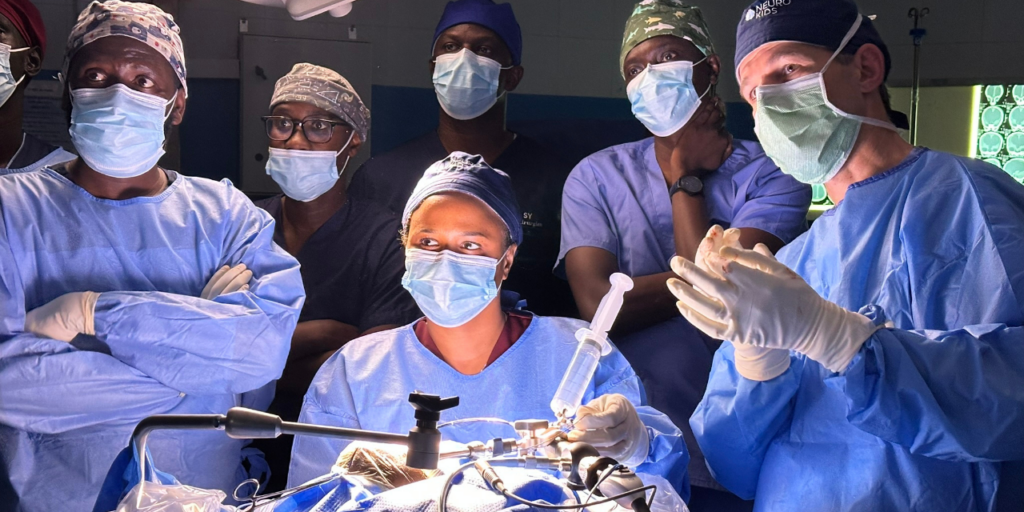
Over the past five years, NeuroKids has trained 22 surgeons to perform ETV/CPC. Nearly 4,000 children in more than 20 countries have received this surgery from local surgeons in their own countries.
Treating hydrocephalus is among the most cost-effective interventions in global health. At around $100 per year of healthy life restored (DALYs averted), it sits alongside cataract surgery, cleft lip and palate repair, and emergency caesarean delivery. Every $1,000 invested restores roughly ten years of healthy life. For every dollar spent on treatment, at least seven dollars, and potentially up to fifty, comes back in long-term economic value .
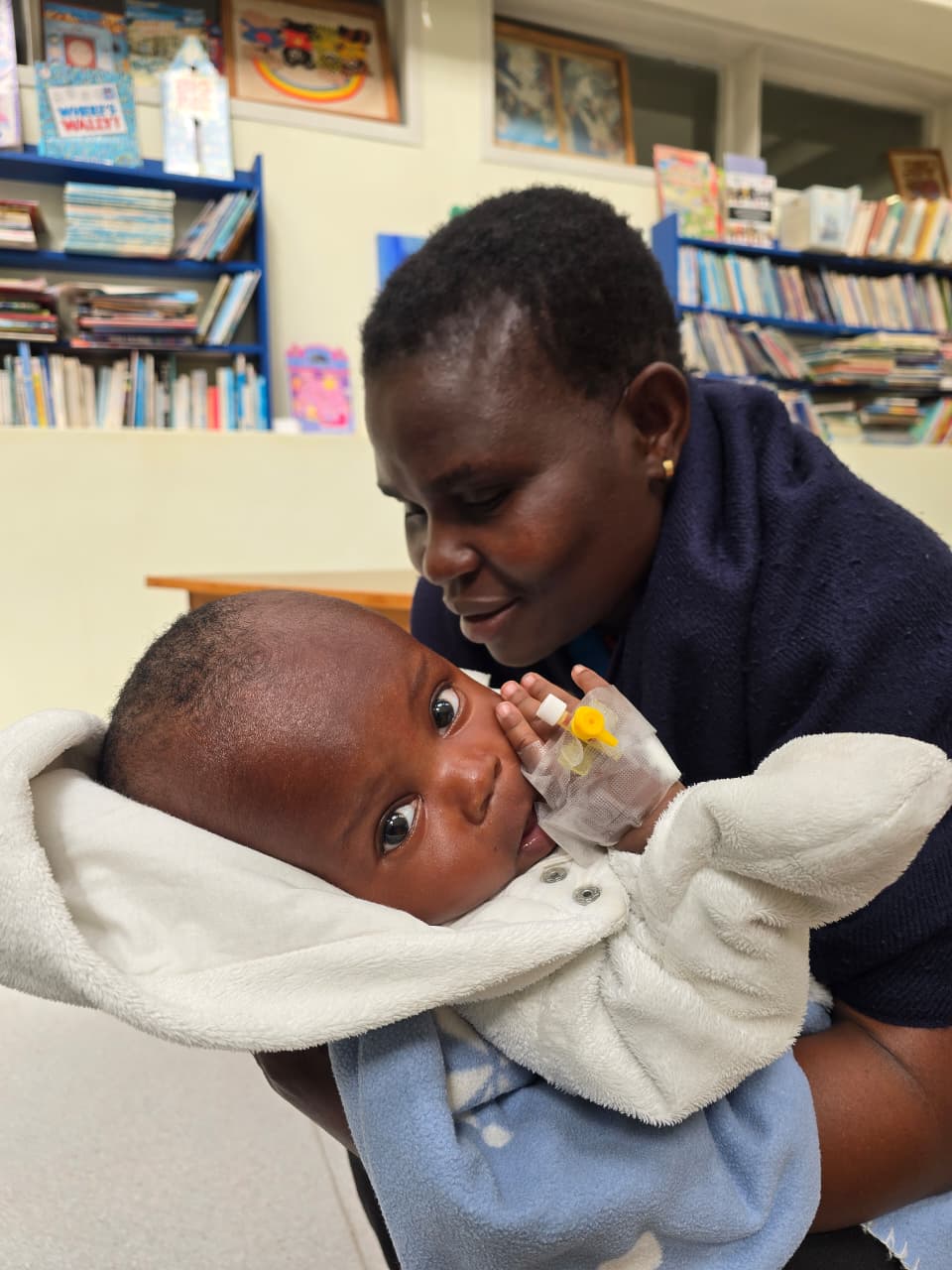
I don’t lead with the economic benefits because the numbers move me. I lead with them because they prove what I already believe. Timely treatment means infants surviving past their second birthday. It means a child reaching school age without a string of neurosurgical crises. It means a family that never has to sell what little they have to make an emergency trip to the city in the middle of the night.
What early diagnosis actually requires
Scaling NeuroKids impact requires two things:
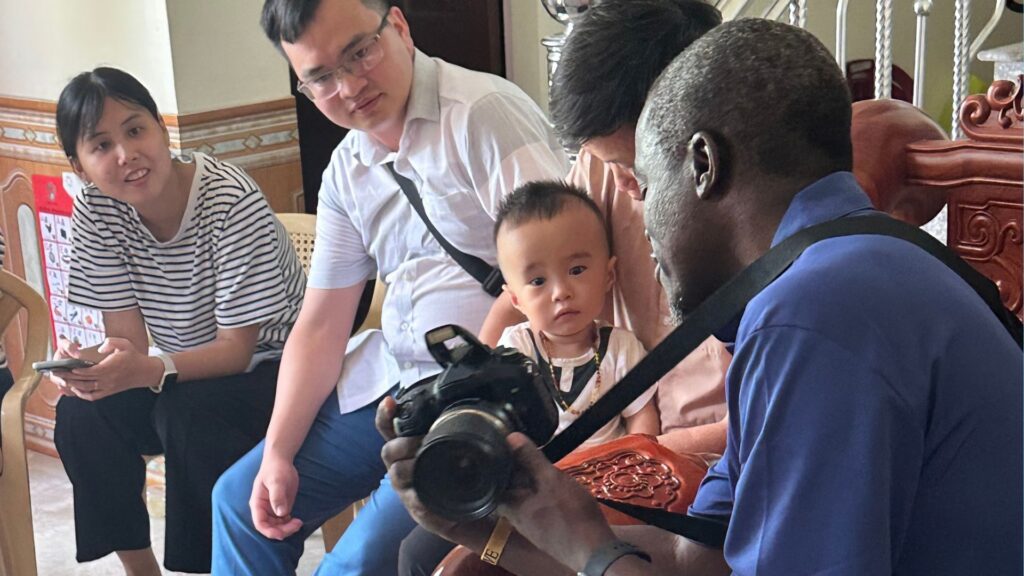
1. Early identification: It means community health workers, nurses, and midwives who know what to look for. It means a simple tape measure and the knowledge of what a head circumference number means. It means mothers who have heard, from someone they trust, that a baby’s head growing too quickly is a reason to seek care now, not later. It means referral pathways that actually connect a rural clinic to a surgeon who can help.
2. Treatment capacity. This is intensely local: trained surgeons, functioning equipment, and ongoing mentorship that keeps skills sharp. It’s why we partner with local hospitals and surgeons, using remote mentorship platforms, so that a surgeon in Malawi or Afghanistan can get real-time support from some of the most experienced hydrocephalus surgeons in the world.
When those two pieces come together, more children are diagnosed earlier, referred faster, and treated sooner with procedures like ETV/CPC. They have follow up appointments after surgery. And they are cared for within health systems that belong to their own countries. Over time, those countries build neurosurgical programs that independently identify, diagnose, treat, and follow children with hydrocephalus.
Why we keep going
We believe every child carries inherent dignity. A baby born in a village in northern Uganda deserves the same shot at life as a baby born in Boston. That belief is the foundation of everything we do, and it is why timely treatment matters so much to us.
Three minutes. That’s the interval. Somewhere, right now, a child whose life could have been saved by a timely diagnosis and a surgery we know how to do is running out of time.
We can shorten that interval. We are shortening it. But we need more people to know that hydrocephalus exists, that it is treatable, and that the earlier we find these babies, the more of them will grow up.
Early matters. Early is everything.