
For families facing a diagnosis of infant hydrocephalus or spina bifida, the hospital can feel overwhelming. Beyond the complex medical challenges, too many mothers also face stigma, isolation, and misinformation.
As a NeuroKids Coordinator at University Teaching Hospital (UTH) in Lusaka, Zambia, Mwanidah Mlinga helps ensure families never face that journey alone.
Born and raised in Zambia, Mwanidah is from the Tumbuka tribe and greets her community with a warm “Moniye.” In the bustling capital of Lusaka, she easily switches to the local Nyanja greeting, “Bwanji.” Her ability to connect with people from different backgrounds reflects exactly what makes her so effective in her work: she understands the communities she serves and knows how to meet families where they are.
Before joining NeuroKids, Mwanidah spent years working as a pediatric nurse in the neurosurgery ward at UTH. It was there that she first witnessed the impact of NeuroKids.
“I would hear about NeuroKids training surgeons in ETV/CPC and providing critical supplies,” Mwanidah recalls. “I researched their mission and vision, and I realized they aligned perfectly with mine. I loved what they were doing for the children of Zambia, and I knew I had to be part of it.”
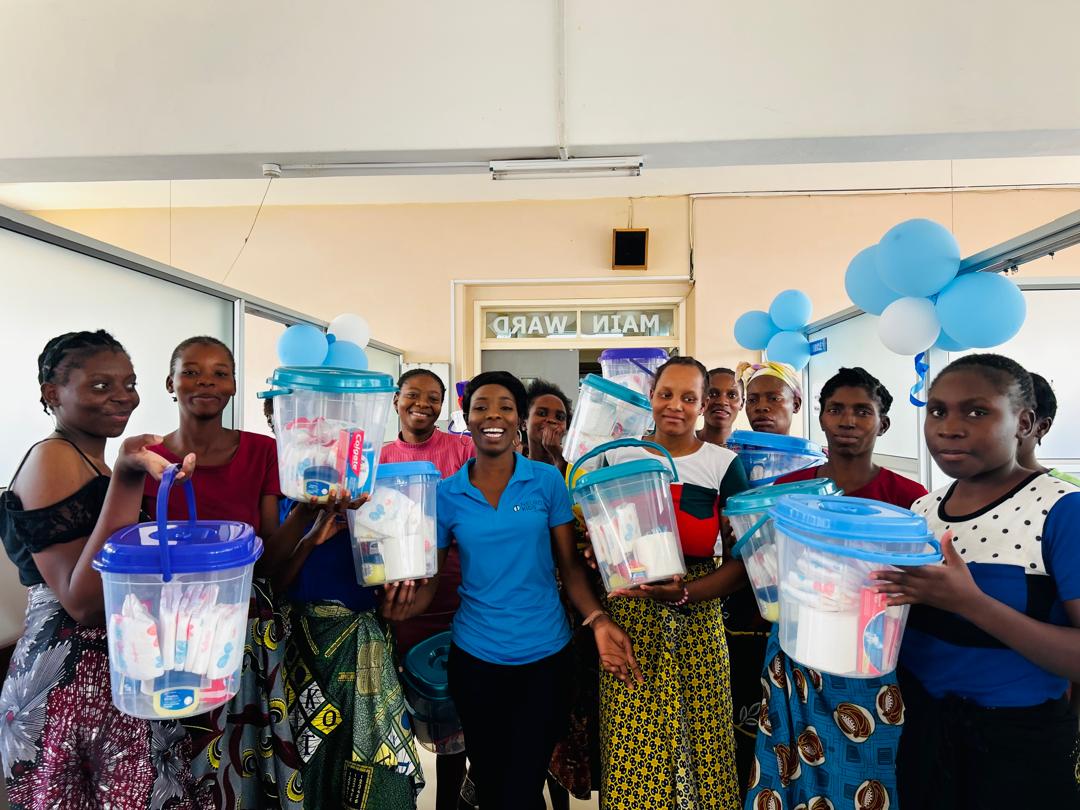
Today, she serves as an essential bridge between families and the surgical team, helping ensure children receive timely care and parents have the information and support they need.

More Than Surgery
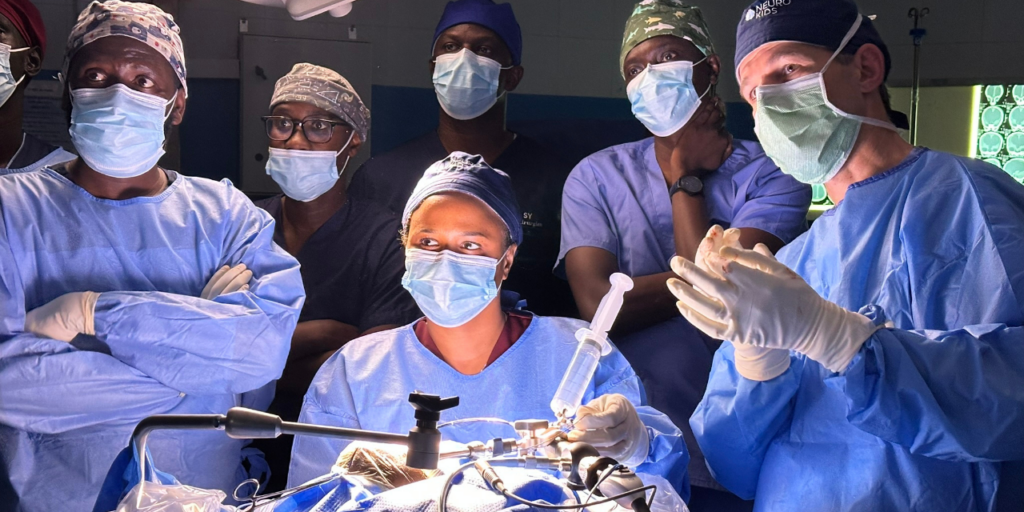
NeuroKids trains local neurosurgeons in the Warf Procedure (ETV/CPC), a minimally invasive treatment that allows many infants with hydrocephalus to avoid lifelong dependence on a shunt. But surgery alone is only part of the story.
“NeuroKids coordinators serve as the bridge between busy neurosurgeons and families,” Mwanidah explains. “We are also solving the problem of misconceptions.”
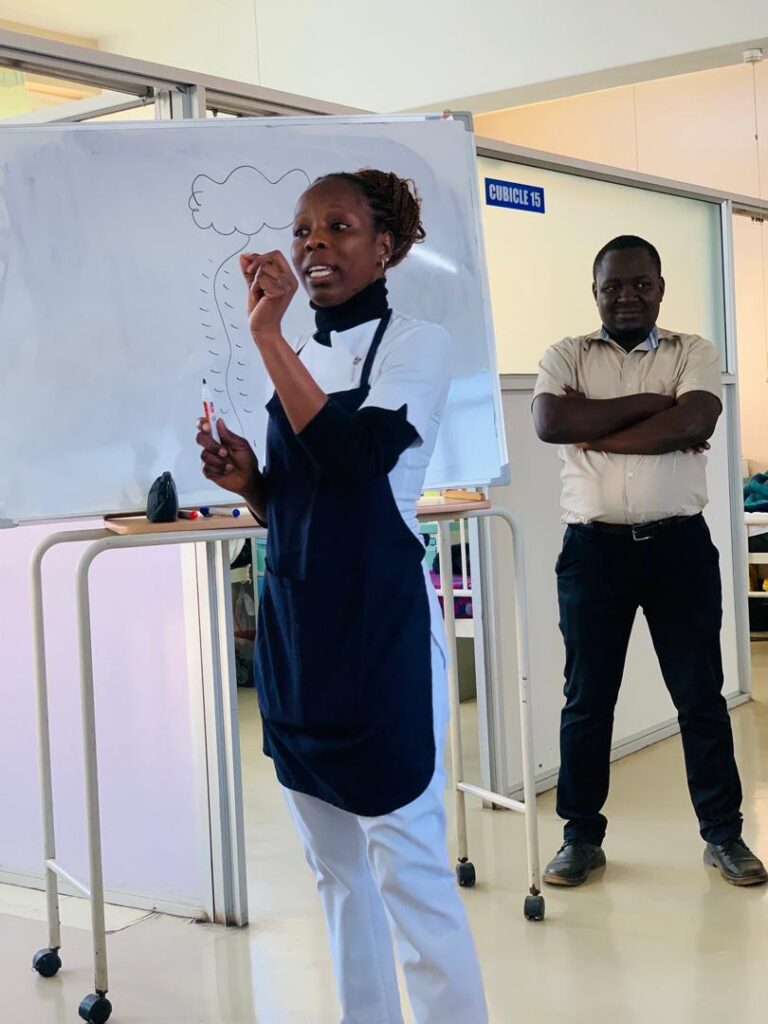
On any given day, Mwanidah attends ward rounds, runs follow-up clinics, and advocates for children awaiting surgery. Yet some of her most important work happens at the bedside, where she helps families understand a diagnosis that many have never heard of before.
“Mothers enter the ward with so many fears,” she says. “They are told they have been bewitched, or that they caused the condition. Some even face broken marriages because they are blamed. I sit with them, allow them to share their pain, and teach them that this is a medical condition. It is not a curse.”
Using drawings and everyday examples, she helps families understand hydrocephalus and what treatment can mean for their child.
Catherine’s Story
One child Mwanidah will never forget is Catherine.
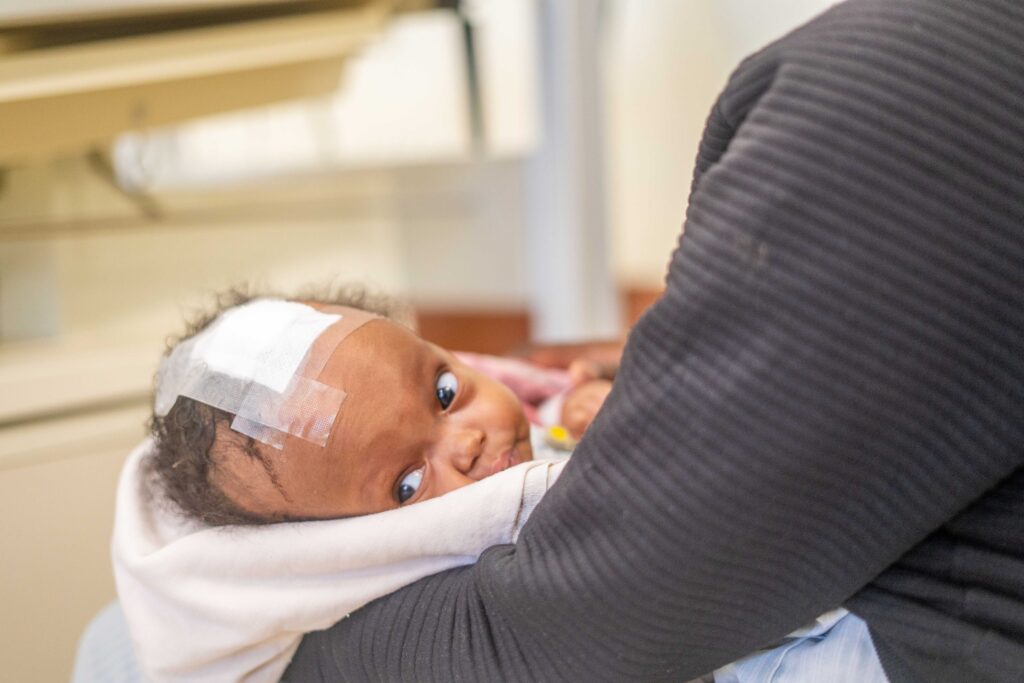
When five-month-old Catherine arrived at UTH, her head was severely enlarged, and she was
too weak to hold up her neck. She could no longer smile or recognize her family’s voices.
Desperate for answers, her mother and grandmother had traveled to multiple churches and even sought help from a traditional healer.
Mwanidah and the neurosurgical team sat down with the family, explained hydrocephalus in simple terms, and admitted Catherine for emergency ETV/CPC surgery.
Three months later, Catherine returned for follow-up.
“The change was remarkable,” Mwanidah says. “The baby was smiling, laughing, and holding her neck. Her mother looked at me and said, ‘Now my baby knows my voice!’ The grandmother was in tears. They thought all hope was lost because their community had abandoned them, but everything changed.”
Today, Catherine is reaching developmental milestones and learning to sit with support. Families like hers often become advocates in their communities, helping others understand that treatment is possible and that hope exists.
Turning Fear Into Hope
NeuroKids has helped expand access to pediatric neurosurgical care at UTH by strengthening local surgical capacity and supporting families throughout their journey.
When asked what motivates her most, Mwanidah doesn’t hesitate.
“There is only one reason: with NeuroKids, I get to watch fear turn into hope,” she says. “Our surgeons are trained, and our mothers feel incredibly loved when we follow up with them. NeuroKids has dedicated everything to improving the quality of life for these beautiful children.”
For Mwanidah, that hope is what makes every day worth it.
And for the families she walks alongside, she is far more than a coordinator. She is an educator, an advocate, and a reminder that no family has to face hydrocephalus alone.