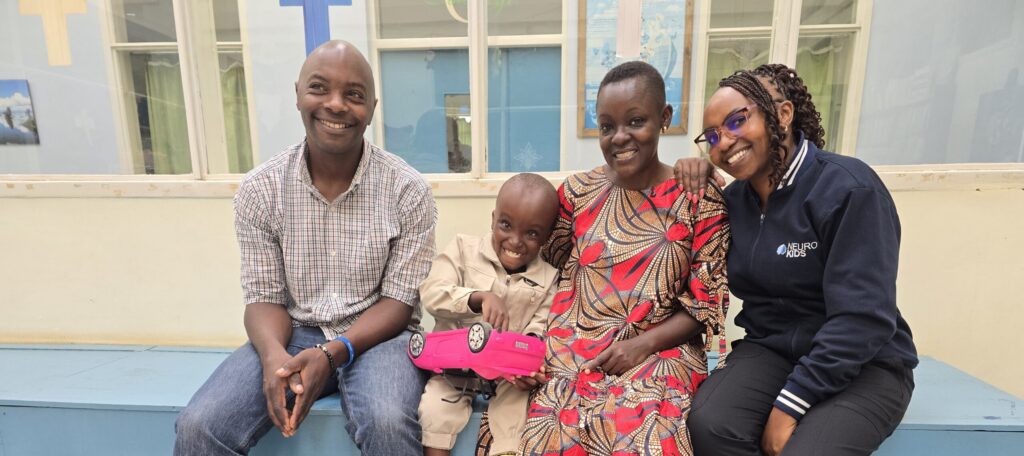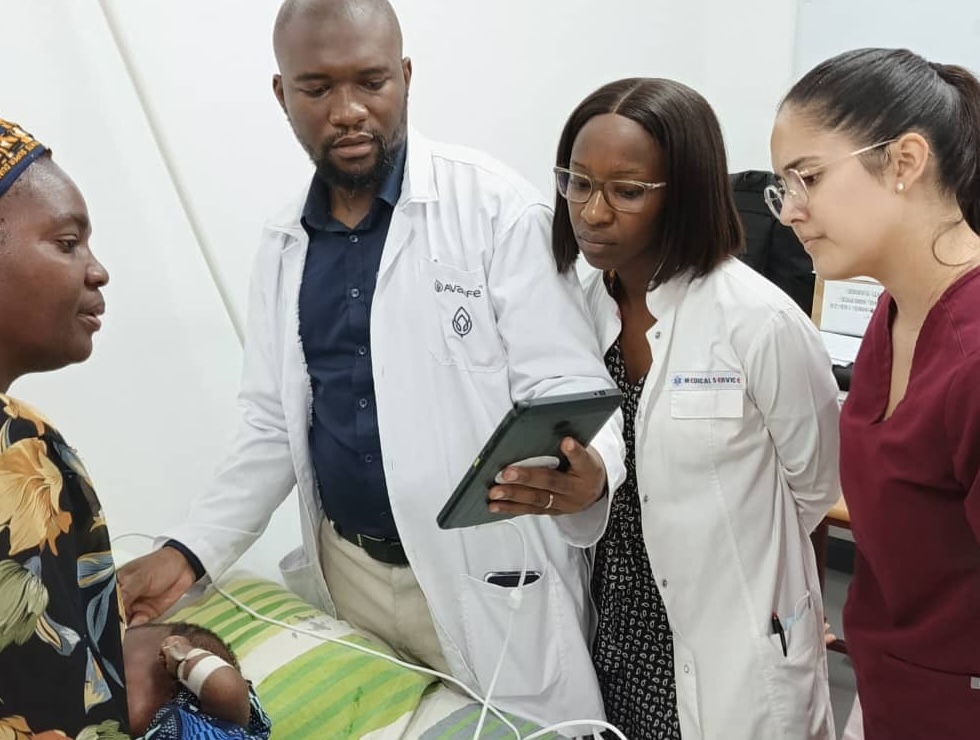

In the pediatric neurosurgery ward at University Teaching Hospital in Lusaka, Zambia, a small handheld device is transforming how children with hydrocephalus receive care. point-of-care ultrasound (POCUS) is doing something profound: allowing doctors to diagnose immediately, act quickly, and provide life-saving treatment with fewer barriers.
The Challenge
Hydrocephalus is the most common childhood brain condition in the world. Without surgery, most children with hydrocephalus will not survive beyond age two.
In many NeuroKids partner hospitals, children with suspected hydrocephalus or spina bifida face severe delays in diagnosis. Access to imaging tools like CT and MRI scans is limited and costly. This can lead to missed or delayed diagnoses, critical delays in life-saving surgical care, and a greater risk of children being lost to follow-up, especially in rural communities.
The Innovation
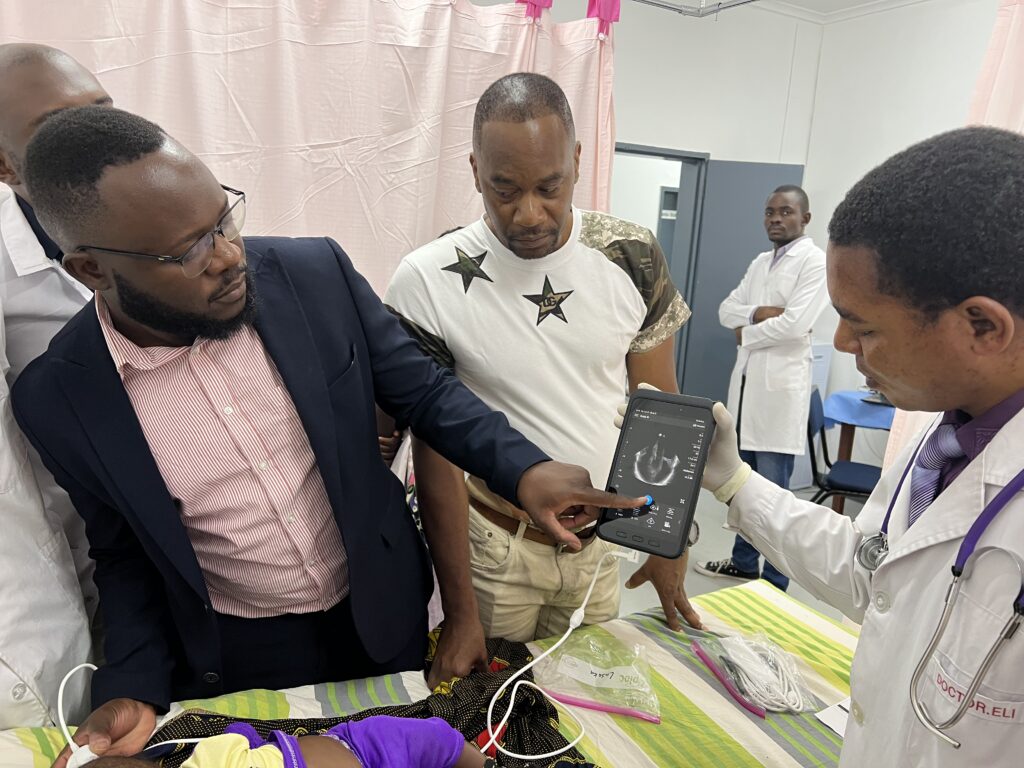
POCUS is a low-cost, portable diagnostic tool that enables real-time imaging directly at the bedside. In early trials in Zambia, handheld probes were used to assess brain ventricles and detect hydrocephalus in infants. Clinicians could triage patients faster, prioritize surgical cases, and begin early intervention planning.
A Surgeon’s Perspective
Dr. Wilmot Sinyangwe, Consultant Neurosurgeon at University Teaching Hospital, has witnessed firsthand how POCUS changes outcomes for children with hydrocephalus.
How does having access to POCUS impact the outcome for children with hydrocephalus?
“Having bedside POCUS fundamentally changes how we manage hydrocephalus by enabling immediate, non-invasive assessment. This speed translates directly to better outcomes: we can detect complications earlier, intervene sooner, and potentially prevent the neurological damage that comes with prolonged, undetected high pressure.”
What about follow-up care for families who live far from the hospital?
“For families traveling long distances, follow-up care is a major barrier. POCUS is transformative because it allows for effective follow-up without requiring a full radiology appointment. During a routine clinic visit, we can quickly perform a free, bedside scan. scan is reassuring, we confidently discharge the family, saving them the cost and time of an additional hospital stay. This eliminates the financial anxiety associated with imaging. Families no longer have to choose between paying for a scan and affording transport home or food.”
Through a Family’s Eyes
Gezile Phiri, a Clinical Coordinator at the hospital, works directly with families as they navigate their child’s diagnosis and treatment.
How has POCUS changed the experience for families?
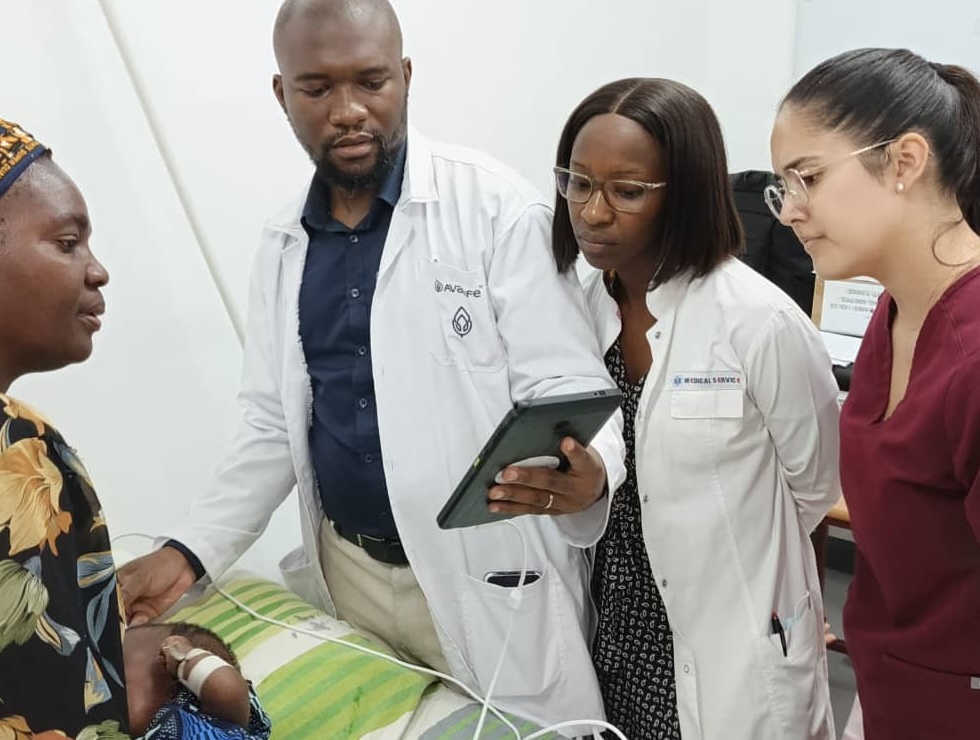
“POCUS significantly reduces anxiety and uncertainty for families. A diagnosis of hydrocephalus is frightening and often compounded by stigma and misinformation. The ability to perform an immediate, bedside scan provides instant visual feedback. The family is shown the images of their child’s brain, explained to the condition in real-time, and demonstrate the treatment’s effectiveness, turning an abstract concept into a tangible reality.”
Can you share an example of how POCUS has helped a child get faster care?
“I witnessed a case where a child came in with symptoms of raised pressure, vomiting and some seizures. So, during a major ward round with Dr. Bhebhe he immediately used the POCUS just at the bedside Instead of waiting hours for a formal ultrasound or CT scan (which also carries a high fee), he instantly confirmed that it was hydrocephalus and determined the urgency of the situation and that baby was put on the list for surgeries for the following day.”
Scaling the Innovation
Building on the success of early trials in Zambia, NeuroKids is working to scale POCUS across our global network of partner hospitals. With strategic investment, we will integrate POCUS into care globally, enabling earlier and safer intervention.
By embedding POCUS in local systems of care, we can reduce dependency on expensive imaging infrastructure, accelerate treatment timelines, and save more children’s lives.
Dr. Sinyangwe’s words capture the heart of this work: “This donation is not just a machine; it is a lifeline, and we are determined to use it to its fullest potential for every child who walks through our doors.”